| Category | Straight Bourbon Whiskey |
|---|---|
| Country | Region | United States, Arkansas |
| Distillery | Fox Trail Distillery |
| Age statement | NAS |
| Alcohol % | Proof | 51.5% | 103 pf |
| Release | Small batch release |
| Mash bill | Undisclosed bourbon mash bill |
| Cask type | New charred oak |
| Price point | $60 |
| Bottle status | Active |
Fox Trail Arkansas Straight Bourbon

Appearance / Color
Warm amber with golden highlights — clean and inviting, with moderate viscosity.
Nose / Aroma / Smell
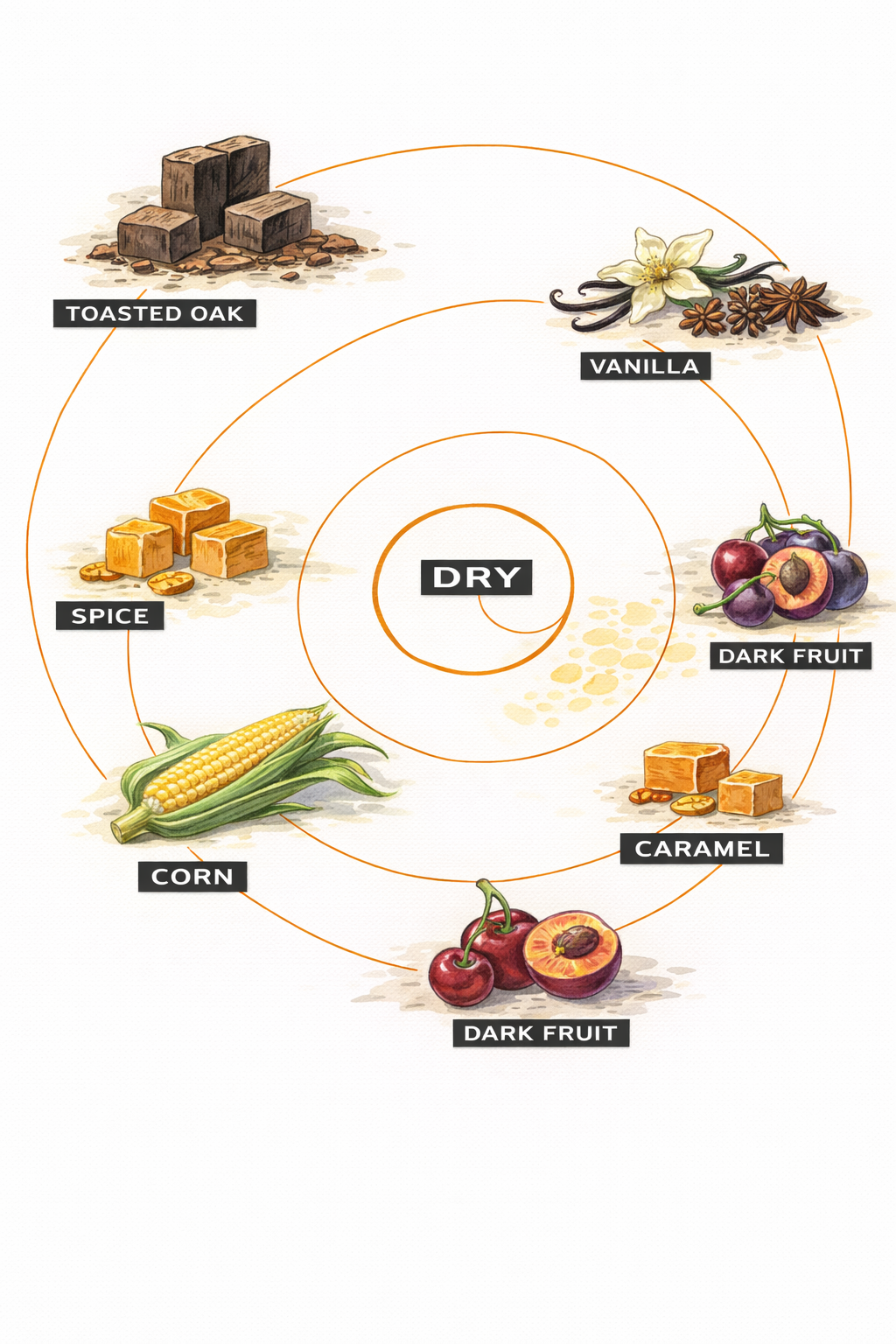
Balanced and approachable. Caramel and vanilla lead, supported by light oak, honey, and soft baking spice. There’s a subtle grain-forward quality—fresh corn sweetness and a slightly herbal undertone that reflects its regional character.
Flavor / Taste / Palate
Smooth and easy-drinking. Classic bourbon sweetness up front with caramel, vanilla, and light toffee. Mid-palate introduces gentle spice—cinnamon and a touch of pepper—alongside toasted grain and mild oak. The profile leans clean and straightforward rather than complex.
Finish
Medium length and clean. Soft oak, light spice, and a fading sweetness linger briefly before tapering off smoothly.
Fox Trail represents a newer wave of regional American bourbon, produced outside the traditional Kentucky stronghold—in this case, Arkansas. This shift reflects a broader movement in whiskey where smaller producers are building identity through local grain, climate, and production style. At 51.5% ABV, this small batch bourbon sits in a sweet spot: high enough proof to carry flavor, but still approachable for a wide audience. It doesn’t aim to compete with heavily aged or highly finished bourbons—instead, it focuses on delivering a clean, balanced, and accessible profile. Compared to more aggressive or experimental releases, Fox Trail leans into drinkability and familiarity, making it a strong entry point for newer drinkers while still offering enough structure for enthusiasts. What makes it interesting in a lineup is contrast—it highlights how regional variation and production philosophy can shape a bourbon that feels different from Kentucky staples, even when using similar foundational ingredients.
Fox Trail Arkansas Straight Bourbon
- Category
- Straight Bourbon Whiskey
- Distillery
- Fox Trail Distillery
- Country | Region
- United States, Arkansas
- Age Statement
- NAS
- Alcohol / Proof
- 51.5% / 103 pf
- Price Point
- $60
- Mash Bill
- Undisclosed bourbon mash bill
- Cask Type
- New charred oak
- Release
- Small batch release
Appearance
Warm amber with golden highlights — clean and inviting, with moderate viscosity.
Nose
Balanced and approachable. Caramel and vanilla lead, supported by light oak, honey, and soft baking spice. There’s a subtle grain-forward quality—fresh corn sweetness and a slightly herbal undertone that reflects its regional character.
Palate
Smooth and easy-drinking. Classic bourbon sweetness up front with caramel, vanilla, and light toffee. Mid-palate introduces gentle spice—cinnamon and a touch of pepper—alongside toasted grain and mild oak. The profile leans clean and straightforward rather than complex.
Finish
Medium length and clean. Soft oak, light spice, and a fading sweetness linger briefly before tapering off smoothly.
Fox Trail represents a newer wave of regional American bourbon, produced outside the traditional Kentucky stronghold—in this case, Arkansas. This shift reflects a broader movement in whiskey where smaller producers are building identity through local grain, climate, and production style. At 51.5% ABV, this small batch bourbon sits in a sweet spot: high enough proof to carry flavor, but still approachable for a wide audience. It doesn’t aim to compete with heavily aged or highly finished bourbons—instead, it focuses on delivering a clean, balanced, and accessible profile. Compared to more aggressive or experimental releases, Fox Trail leans into drinkability and familiarity, making it a strong entry point for newer drinkers while still offering enough structure for enthusiasts. What makes it interesting in a lineup is contrast—it highlights how regional variation and production philosophy can shape a bourbon that feels different from Kentucky staples, even when using similar foundational ingredients.
Fox Trail Arkansas Straight Bourbon tasting sheet